
- STEEL INSPECTION FOR QUALITY EXCELLENCE
- Boost Steel Quality & Process Efficiency with Surface Inspection
- Expert Guide: Focus on advanced steel surface quality inspection
- Slab Inspection at the Source – Surface Quality Starts in Casting
- Plate Inspection – Identify Surface & Topographical Defects Early
- Hot Inspection – Ensure Surface Quality Before Coiling
- Cold Inspection – Detect Cold Rolling and Processing Defects
- Expert Guide: Focus on advanced steel surface quality inspection
- 生产分析-数据驱动高效生产
- 量身定制的服务解决方案和个性化培训
- Contact our experts
Boost Steel Quality & Process Efficiency with Surface Inspection
Steel production is a high-stakes, precision-driven process. From slab casting to final coiling, surface defects and inefficiencies can lead to costly rework, customer claims, or reputational damage. That’s why global manufacturers rely on our surface inspection systems—engineered to detect, classify, and localize defects inline, 24/7, and under harsh conditions.
Spanning the entire flat steel process chain, our systems deliver real-time quality data and actionable insights—enabling early intervention, improved material utilization, and smarter decisions at every stage. Whether identifying casting cracks, performing predictive roll maintenance, or optimizing output across the line, operators gain full transparency and process control.
With future-ready technology and global service support, our automated inspection systems help maximize uptime, improve energy efficiency, and ensure long-term competitiveness at the lowest total cost of ownership.
Integrated Inspection. Measurable Impact.
- Consistent Quality: Detect and classify surface defects inline to reduce claims and ensure top-grade output.
- Process Control: Gain real-time insights for faster reactions, better decisions, and audit-ready documentation.
- Maximum Uptime: Spot wear trends early and avoid unplanned downtime with predictive maintenance.
- Global Service, local support: Rely on proven industry experience and a worldwide service network.
Detect Surface Defects and Optimize Steel Production – From Slab to Coil



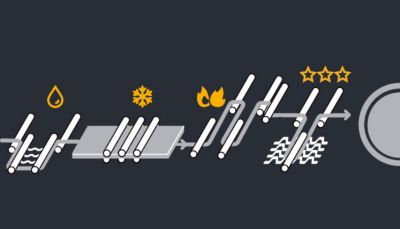

Slab Inspection at the Source – Surface Quality Starts in Casting
Up to 60% of all quality-relevant surface defects originate in the slab—yet many remain undetected until later stages. At this point, glowing surfaces and rough textures challenge conventional inspection systems.

Our state-of-art surface quality monitoring solution combines parallel 2D and 3D surface inspection to detect even subtle anomalies — like cracks, grooves, or burrs—on all four sides of the slab.
Real-time depth measurement and multi-step defect classification enable operators to distinguish critical from non-critical defects. Via a user-friendly interface, your team can take immediate action: send a slab for grinding, reroute it for less demanding applications, or reject it entirely. Optional modules support cross-process tracking and decision-making for long-term optimization.
The result: Early defect detection reduces downstream damage, stabilizes quality, and unlocks measurable cost savings.
- Benefits
- Defects
- Features
- Early-stage defect detection prevents downstream damage and ensures consistent product quality
- Cost and energy efficiency through early filtering of substandard slabs and reduced rework
- Seamless system integration including grinder connectivity and easy retrofit into existing lines
- Process optimization via cross-process defect tracking and slab reassignment modules
- Fast return on investment through intuitive operation, system uptime, and measurable quality gains
Typical 2D contrast-based surface defects
- Non-metallic inclusions – Foreign particles trapped in the steel during casting
- Blisters – Raised areas caused by trapped air or water beneath the surface
- Cracks (visible) – Longitudinal or transverse surface cracks formed by thermal stress or mold oscillation.
- Scaling – Flaking or peeling of surface layers due to poor curing or thermal cycling
- Discoloration / oxidation zones - Irregular color patches caused by overheating
or surface oxidation, often misclassified by 2D inspection systems.
Typical 3D topographical defects
- Spider cracks – Fine, branching cracks often caused by mold surface conditions or copper particle contamination
- Oscillation marks – Formed during mold oscillation in continuous casting
- Corner and edge tears – Mechanical damage at slab edges from improper mold design or casting speed
- Scum patches and pits – Surface depressions caused by slag inclusions or gas entrapment
- Bleeder and scab defects – Irregularities from molten steel leakage or solidification issues
- Topographic distortion - Wave‑like irregularities on hot,
structured surfaces detectable only through 3D triangulation.
- Parallel 2D/3D Inspection: Combines contrast-based 2D imaging and laser triangulation-based 3D topography for reliable detection of surface and depth defects on hot, structured slabs.
- Real-Time Multi-Angle Analysis: Ensures complete surface evaluation—including edge crack detection—via additional side-view sensors.
- Inline Depth & Dimension Measurement: Accurately determines defect depth and slab dimensions to improve grinder alignment and downstream handling.
- Robust Defect Classification: Algorithms distinguish surface flaws from natural slab textures under extreme conditions.
- Thermal Protection & Cooling: Smart cooling and shielding enable uninterrupted operation on hot slab surfaces.
- Grinder System Integration: Real-time feedback loop supports automatic grinder adjustment for efficient defect removal.
Hyundai Steel Boosts Productivity and Cuts Costs with 3D Slab Inspection
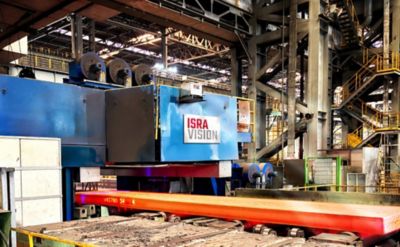
“The partnership between Hyundai Steel and ISRA VISION goes beyond the traditional supplier-customer relationship. Thanks to continuous innovation and proactive support, we have been able to utilize the pioneering technology of this machine vision specialist to significantly improve the efficiency of our casting process monitoring and quality management. ISRA VISION is a valuable partner on our path to excellence. The responsiveness and good support are particularly worth mentioning.”
Tae Soo Moon
Machine Vision Research Team Leader
Hyundai Steel
Plate Inspection – Identify Surface & Topographical Defects Early
High temperatures, vibrations, and rough ambient conditions make surface inspection in plate rolling particularly difficult—especially when thick steel plates develop complex surface textures during deformation. Yet if defects like edge tears, scale, or scabs are missed at this stage, they often reappear downstream—damaging equipment, causing rework, or resulting in customer complaints. That’s why plate rolling requires reliable inline inspection.

Operators gain topographical defect data and surface metrics to decide: Is the flaw critical? Should the plate be reworked, downgraded, or accepted? This enables fast, confident decisions, early correction, and stable product quality—despite harsh conditions.
The result: smarter defect handling, less waste, fewer claims—and a more competitive rolling process.
- Benefits
- Defects
- Features
- Early Defect Handling – Enables fast rework, reduces downstream damage and claims
- Reliable Classification – Distinguishes critical from cosmetic flaws for better decisions
- Smarter Operations – Supports predictive maintenance and root cause analysis
- Audit-Ready Documentation – Traceable defect data for ASTM and EN quality compliance
- Process Stability & Efficiency – Reduces rework and material loss, even under harsh conditions
Typical 2D contrast-based surface defects
- Surface Cracks – Visible breaks in the surface caused by thermal stress or mechanical strain
- Discoloration – Irregular color patches due to oxidation, overheating, or contamination
- Scratches and Gouges – Linear or deep surface damage from handling or processing tools
- Blisters / Scabs – Raised or flaky areas caused by trapped gas or slag during solidification
- Delamination – Separation of surface layers, often due to internal stress or inclusions
Typical 3D topographical defects
- Oscillation Marks – Repetitive depressions from mold oscillation during casting
- Depressions and Pits – Localized surface indentations caused by slag entrapment or gas bubbles
- Bulges and Raised Areas – Surface protrusions due to uneven solidification or internal pressure
- Edge and Corner Defects – Irregularities or damage at slab boundaries from mechanical stress
- Surface Waviness – Undulating surface profile caused by inconsistent cooling or rolling
- Unique, parallel contrast-based 2D and topographical 3D inspection solution
- Defect depth analysis via 3D triangulation
- Real-time defect classification
- Documentation to meet US (ASTM) or EU (EN) quality standards
- Modular, ruggedized sensor housing
- Designed for high-speed, high-temperature environments
Shandong Steel Optimizes Plate Mill Processes with Inline 3D Inspection
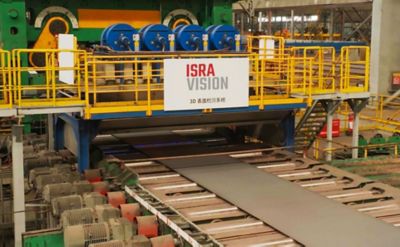
"With the use of the inline inspection system PLATE MASTER 3D from ISRA VISION, we have been able to significantly reduce the labour and time required for surface inspection of the plates compared to before. Additionally, our quality managers receive meaningful information to address defect causes and optimize our processes. This has made it possible not only to improve the quality of our products and customer satisfaction but also to increase production capacity.”
Li Fuping
Technical Director
Shandong Steel Rizhao
Hot Inspection – Ensure Surface Quality Before Coiling
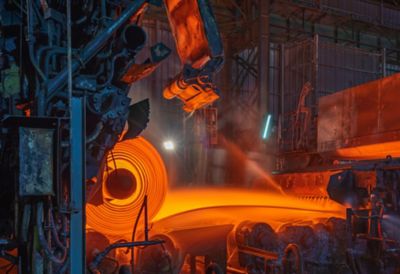
Even after upstream inspection, hot rolling introduces a new set of surface defects—such as edge cracks, shells, blisters, gouges, and ultra-low contrast roll marks. These arise from scale formation, extreme heat, and mechanical stress between the roughing and finishing stands.
Our robust inspection system detects and evaluates all relevant defects in real time—at full line speed, even under extreme conditions.
The result: Fewer rejects, better product consistency, and significantly lower maintenance and downtime.
- Benefits
- Defects
- Features
- Early defect detection minimizes rework, scrap, and customer complaints
- Real-time defect detection at full speed and extreme temperatures
- Innovative defect classification enables reliable decisions and improves process control and process stability
- Consistent surface quality through early defect prevention
- Process transparency through continuous monitoring and defect tracking
- Rugged system design ensures stable performance under oil mist, heat, and vibration
- Fast ROI through easy integration, highest uptimes, and measurable efficiency gains
- Yield improvement through fewer rejects, less rework, and reduced claims
- Blisters
- Shells
- Longitudinal cracks
- Edge cracks
- Scratches, grooves and gouges
- Strip edge defects
- Roll marks
- Scale or oxide patches (due to inadequate descaling)
- Heavy-duty sensor design for stable inspection in extreme heat, vibration, and scale-laden environments
- Defect classification to reliably separate critical from non-critical surface flaws
Cold Inspection – Detect Cold Rolling and Processing Defects
During cold rolling, residual scale from upstream processes can become embedded in the material—causing defects such as inclusions, streaks, or laminations. Combined with roll wear and high mechanical stress, this can lead to additional flaws like edge cracks and ultra-low contrast roll marks.
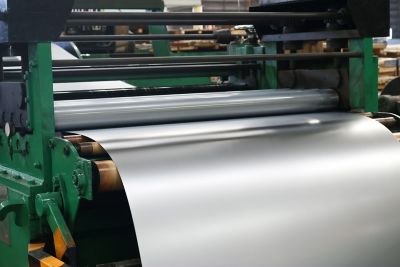
Our inspection system uses sensors to reliably detect and classify these flaws in real time. With encoder-based defect localization classification, operators can instantly evaluate defect relevance and decide whether to coil, reject, or schedule maintenance.
A key advantage: an optional Roll Mark Monitoring Software tracks repeating defect patterns and links them to specific rolls in Cold and Tandem Mills. This enables predictive roll maintenance—so operators can prevent roll-induced surface damage before it happens. With clear, traceable defect classification, critical issues can be distinguished from harmless surface variations, enabling precise intervention and consistent quality.
The result: improved process control, and consistently high-quality output—right before final coiling.
- Benefits
- Defects
- Features
- Early real-time defect detection at full speed minimizes rework, scrap, and customer complaints
- Process transparency through continuous monitoring and defect tracking
- Superior defect detection with multi-channel defect detection available
- Innovative defect classification enables reliable decisions and improves process control and process stability
- Consistent surface quality through early defect prevention
- Rugged system design ensures stable performance under oil mist, heat, and vibration
- Predictive roll monitoring avoids roll-related damage and reduces unplanned downtime
- Fast ROI through easy integration, highest uptimes, and measurable efficiency gains
- Yield improvement through fewer rejects, less rework, and reduced claims
- Blisters: Raised spots from trapped gas or contamination
- Shells: Flaky surface layers that can peel off
- Longitudinal Cracks: Cracks along the rolling direction from stress
- Edge Cracks: Cracks near strip edges due to uneven deformation
- Scratches, Grooves, Gouges: Surface damage from mechanical contact
- Strip Edge Defects: Irregular edges like burrs or folds affecting processing
- Laminations – Internal layer separations that can compromise material integrity
- Inclusions – Embedded non-metallic particles from upstream processes
- Roll Marks – Periodic, low-contrast defects from worn or contaminated rolls
- Compact multi-angle camera setup for structured surface and edge defect analysis
- Defect classification with high-resolution real-time analysis
- Real-time data output enables instant classification and downstream decisions
- Encoder-based defect localization for roll-specific trend monitoring
- Heavy-duty system sensor with protective housing for oil mist, steam, and vibration
- Ultra-low contrast roll mark detection using digital signal stacking
- Roll Mark Monitor software with intuitive traffic-light alerts for predictive roll maintenance
Media hub
- Case study
- Video
- Webcast


生产分析-数据驱动高效生产
通过网络生产分析平台,您可以一目了然地查看所有产线的系统状态,或详细分析生产数据。通过质量管理系统,您可以分析历史数据,实时监控当前的检测数据,并确定生产过程的未来趋势。
及早发现生产缺陷
利用实时状态信息和自动报警功能,在生产的每个阶段检测并快速查明违反警戒线的原因。因此,您可以快速解决生产缺陷,缩短停机时间,降低生产成本。
预测性维护
通过分析来自传感器和监控系统的实时数据, 您可以预防潜在的系统故障。这样就可以根据机器的实际状态,而不是遵循固定的时间表,主动制订维护计划。这种数据驱动的方法可以减少停机时间、提高整体生产效率、延长生产线寿命,从而节约成本。
优化生产
通过数据仪表板,您可以在现场或远程比较产线情况和产品数据,为优化提供关键见解。这使您能够在价值链上做出明智的专业决策,从而提高产品质量和盈利能力。您可以持续跟踪优化措施的进度,并通过可视化的高级报告进行展示。
您的收益
- 省时便捷的多产线预览,一个视图显示所有质量相关信息
- 通过监控系统健康数据,最大限度地减少停机时间
- 通过监控质量数据,对质量问题做出更快反应
- 快速消除生产缺陷,降低生产成本
- 改进维护,减少停机时间,提高整体生产率,延长生产线寿命
主要功能
- 生产数据和工厂状态概览
- 从实时数据中获得实时见解
- 基于网络的解决方案,无需安装客户端软件
- 阈值监控和警报
- 面向各部门的仪表盘,可根据客户要求进行调整
- 可集成相关的第三方数据,并将数据导出到客户的系统
量身定制的服务解决方案和个性化培训


为了帮助您的生产系统高效可靠地运行,满足不断增长的市场需求,我们高素质的服务团队为您提供最优的交流和先进的技术分析。我们全球服务网络,快速、可靠。我们可以确保系统的运行、保养、维修以及分析和优化。
此外,您可以在ISRA学院向我们技术过硬的培训师学习,如何让您的员工时刻掌握最新知识,让系统操作员、产品工程师和质量经理成为真正的检测专家。